Guest Post: Elizabeth LaBan on Writing Adult vs Young Adult Fiction + Giveaway
Welcome Elizabeth. Thanks for stopping by Just Commonly. A little about Elizabeth:

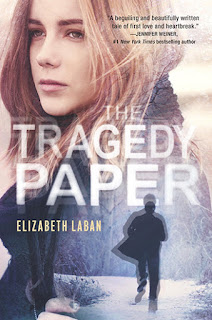 One question I am often asked is how is
it different to write for young adults versus adults since my first novel, The Tragedy Paper, is a young adult
novel and this one, The Restaurant
Critic’s Wife, is women’s fiction. To begin with, the worlds of the books
are very different. With The Tragedy
Paper, I chose to set the story at The Irving School, a boarding school,
which was one way to create a bubble in which the characters’ stories unfolded.
Those characters, by the way, are intentionally teenagers. They have moments in
the real world, such as when Tim is winding his way to school and his plane is
delayed because of bad weather. That’s when he meets Vanessa, someone he never
would have met in the same way in that bubbled universe of school. Choosing the
setting of a boarding school also worked to eliminate most of the adults from
the students’ lives. Sure, there are teachers and administrators, but very few
encounters with parents which serves the readers and the story well. Having two
teenage kids in the house, I am often struck by the lack of perspective they
have, how could they have any, really? That comes with age and time. So as I
write for young adults I try to be aware of that – they are thinking about what
and who is in front of them. Without the parents and adults to nudge them, a
lot of things happen that might otherwise be stopped. It is a great way to tell
a tale.
One question I am often asked is how is
it different to write for young adults versus adults since my first novel, The Tragedy Paper, is a young adult
novel and this one, The Restaurant
Critic’s Wife, is women’s fiction. To begin with, the worlds of the books
are very different. With The Tragedy
Paper, I chose to set the story at The Irving School, a boarding school,
which was one way to create a bubble in which the characters’ stories unfolded.
Those characters, by the way, are intentionally teenagers. They have moments in
the real world, such as when Tim is winding his way to school and his plane is
delayed because of bad weather. That’s when he meets Vanessa, someone he never
would have met in the same way in that bubbled universe of school. Choosing the
setting of a boarding school also worked to eliminate most of the adults from
the students’ lives. Sure, there are teachers and administrators, but very few
encounters with parents which serves the readers and the story well. Having two
teenage kids in the house, I am often struck by the lack of perspective they
have, how could they have any, really? That comes with age and time. So as I
write for young adults I try to be aware of that – they are thinking about what
and who is in front of them. Without the parents and adults to nudge them, a
lot of things happen that might otherwise be stopped. It is a great way to tell
a tale. That leads me to another point, which
is where do the ideas come from? With the young adult fiction I have to think
about it a bit more. I pay a lot of attention to my kids and what they and
their friends worry and care about. I listen to the way they talk and text,
basically the way they communicate, which is different from the way I
communicated as a teenager. My sixteen-year-old texts and Snap Chats, but
rarely calls people, while I had no choice but to call. If I’m setting a young
adult book in 1985, I definitely know my stuff, but if I’m setting it in 2016,
I better make sure I’m getting it right. With The Tragedy Paper, I took much of the physical setting from my high
school. That brought it to life for me. But I also had to change it since there
was no Internet when I was there, or cell phones. Basically my personal experience
with being a teen is not how teens are living their lives now, and I have to be
aware of that. It really isn’t too different from writing a historical novel
when the time and place has to be true to life, and research is required to do
that.
That leads me to another point, which
is where do the ideas come from? With the young adult fiction I have to think
about it a bit more. I pay a lot of attention to my kids and what they and
their friends worry and care about. I listen to the way they talk and text,
basically the way they communicate, which is different from the way I
communicated as a teenager. My sixteen-year-old texts and Snap Chats, but
rarely calls people, while I had no choice but to call. If I’m setting a young
adult book in 1985, I definitely know my stuff, but if I’m setting it in 2016,
I better make sure I’m getting it right. With The Tragedy Paper, I took much of the physical setting from my high
school. That brought it to life for me. But I also had to change it since there
was no Internet when I was there, or cell phones. Basically my personal experience
with being a teen is not how teens are living their lives now, and I have to be
aware of that. It really isn’t too different from writing a historical novel
when the time and place has to be true to life, and research is required to do
that.
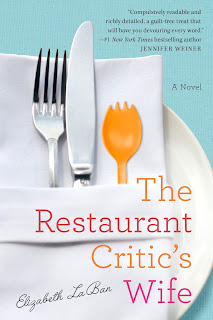 Title: The Restaurant Critic's Wife



This guest post is brought to you by TLC Book Tours. For full list of tour stops, click on the icon below:

Elizabeth LaBan lives in Philadelphia with her restaurant critic husband and two children. She is also the author of The Tragedy Paper, which has been translated into eleven languages, and The Grandparents Handbook, which has been translated into seven languages. Her latest novel, The Restaurant Critic’s Wife is a charming portrait of the complexities of life that many women face when dealing with their marriages, their children, their friendships, and their careers. All the talk about exquisite food is merely the icing on a one-of-a-kind cake.
~ ~ ~ ~ ~ ~ ~ ~ ~ ~ ~ ~ ~ ~ ~ ~ ~ ~ ~ ~ ~ ~ ~ ~ ~ ~ ~ ~ ~ ~ ~ ~ ~
 One question I am often asked is how is
it different to write for young adults versus adults since my first novel, The Tragedy Paper, is a young adult
novel and this one, The Restaurant
Critic’s Wife, is women’s fiction. To begin with, the worlds of the books
are very different. With The Tragedy
Paper, I chose to set the story at The Irving School, a boarding school,
which was one way to create a bubble in which the characters’ stories unfolded.
Those characters, by the way, are intentionally teenagers. They have moments in
the real world, such as when Tim is winding his way to school and his plane is
delayed because of bad weather. That’s when he meets Vanessa, someone he never
would have met in the same way in that bubbled universe of school. Choosing the
setting of a boarding school also worked to eliminate most of the adults from
the students’ lives. Sure, there are teachers and administrators, but very few
encounters with parents which serves the readers and the story well. Having two
teenage kids in the house, I am often struck by the lack of perspective they
have, how could they have any, really? That comes with age and time. So as I
write for young adults I try to be aware of that – they are thinking about what
and who is in front of them. Without the parents and adults to nudge them, a
lot of things happen that might otherwise be stopped. It is a great way to tell
a tale.
One question I am often asked is how is
it different to write for young adults versus adults since my first novel, The Tragedy Paper, is a young adult
novel and this one, The Restaurant
Critic’s Wife, is women’s fiction. To begin with, the worlds of the books
are very different. With The Tragedy
Paper, I chose to set the story at The Irving School, a boarding school,
which was one way to create a bubble in which the characters’ stories unfolded.
Those characters, by the way, are intentionally teenagers. They have moments in
the real world, such as when Tim is winding his way to school and his plane is
delayed because of bad weather. That’s when he meets Vanessa, someone he never
would have met in the same way in that bubbled universe of school. Choosing the
setting of a boarding school also worked to eliminate most of the adults from
the students’ lives. Sure, there are teachers and administrators, but very few
encounters with parents which serves the readers and the story well. Having two
teenage kids in the house, I am often struck by the lack of perspective they
have, how could they have any, really? That comes with age and time. So as I
write for young adults I try to be aware of that – they are thinking about what
and who is in front of them. Without the parents and adults to nudge them, a
lot of things happen that might otherwise be stopped. It is a great way to tell
a tale.
In The
Restaurant Critic’s Wife, Lila lives in a big city dealing with people of
all ages every day. She is a little confused about how she ended up where she
is – it was not her intention or life plan – but she does have perspective and
knows (or at least thinks she knows) what she wishes her life could be. Even
though it might seem the other way, that the lack of perspective and young adult
way would be more freeing, I find Lila’s world, which in many ways is my world,
to be the easier (and more familiar) place in which to live and write. If I see
something crazy or intriguing happen in Rittenhouse Square or at the Acme in
South Philadelphia, I can usually find a way to fit it into my women’s fiction.
That isn’t always the case with the young adult novels.
 That leads me to another point, which
is where do the ideas come from? With the young adult fiction I have to think
about it a bit more. I pay a lot of attention to my kids and what they and
their friends worry and care about. I listen to the way they talk and text,
basically the way they communicate, which is different from the way I
communicated as a teenager. My sixteen-year-old texts and Snap Chats, but
rarely calls people, while I had no choice but to call. If I’m setting a young
adult book in 1985, I definitely know my stuff, but if I’m setting it in 2016,
I better make sure I’m getting it right. With The Tragedy Paper, I took much of the physical setting from my high
school. That brought it to life for me. But I also had to change it since there
was no Internet when I was there, or cell phones. Basically my personal experience
with being a teen is not how teens are living their lives now, and I have to be
aware of that. It really isn’t too different from writing a historical novel
when the time and place has to be true to life, and research is required to do
that.
That leads me to another point, which
is where do the ideas come from? With the young adult fiction I have to think
about it a bit more. I pay a lot of attention to my kids and what they and
their friends worry and care about. I listen to the way they talk and text,
basically the way they communicate, which is different from the way I
communicated as a teenager. My sixteen-year-old texts and Snap Chats, but
rarely calls people, while I had no choice but to call. If I’m setting a young
adult book in 1985, I definitely know my stuff, but if I’m setting it in 2016,
I better make sure I’m getting it right. With The Tragedy Paper, I took much of the physical setting from my high
school. That brought it to life for me. But I also had to change it since there
was no Internet when I was there, or cell phones. Basically my personal experience
with being a teen is not how teens are living their lives now, and I have to be
aware of that. It really isn’t too different from writing a historical novel
when the time and place has to be true to life, and research is required to do
that.
With my women’s fiction I am constantly
taking from my everyday life, which in many cases makes it a little easier. Whatever
my friends are talking about, or my neighbors, or my sister-in-law, might fit
right into the story I’m playing with at the time. Sometimes I’ll think of
something I think is funny and I’ll wonder how I can use it. Recently, for
example, my long lost childhood dream of being in the Broadway musical Annie came up again and my son teased
that I should try to do it now, maybe there’s a community production somewhere.
I laughed, and then immediately thought how funny it would be to have a scene
in a book where all these women about my age, those who grew up in the late
1970s and early 1980s, participated in a community theater production of Annie. I mean, what ten or eleven year
old in 1977 didn’t want to be Andrea McArdle? It would have to be a side story,
just a tiny glimpse into the character. It wouldn’t be the whole book,
obviously. But it could be funny, right?
For me, though, most of that world
building and character development come early in the process. Once I get into a
book, once I know the characters inside and out, it doesn’t matter as much whether
it is geared toward a young adult or an adult audience. At that point I just
write – keeping the character’s ages and my audience in the back of my mind –
and see where it takes me.
TO CONNECT WITH ELIZABETH: website, facebook, twitter
~ ~ ~ ~ ~ ~ ~ ~ ~ ~ ~ ~ ~ ~ ~ ~ ~ ~ ~ ~ ~ ~ ~ ~ ~ ~ ~ ~ ~ ~ ~ ~ ~
Title: The Restaurant Critic's Wife
Author: Elizabeth LaBan
Publisher: Lake Union Publishing
Publisher: Lake Union Publishing
Release Date: January 5, 2016
ABOUT THE BOOK
Lila Soto has a master’s degree that’s gathering dust, a work-obsessed husband, two kids, and lots of questions about how exactly she ended up here.
In their new city of Philadelphia, Lila’s husband, Sam, takes his job as a restaurant critic a little too seriously. To protect his professional credibility, he’s determined to remain anonymous. Soon his preoccupation with anonymity takes over their lives as he tries to limit the family’s contact with anyone who might have ties to the foodie world. Meanwhile, Lila craves adult conversation and some relief from the constraints of her homemaker role. With her patience wearing thin, she begins to question everything: her decision to get pregnant again, her break from her career, her marriage—even if leaving her ex-boyfriend was the right thing to do. As Sam becomes more and more fixated on keeping his identity secret, Lila begins to wonder if her own identity has completely disappeared—and what it will take to get it back.
TO PURCHASE A COPY

~ ~ ~ ~ ~ ~ ~ ~ ~ ~ ~ ~ ~ ~ ~ ~ ~ ~ ~ ~ ~ ~ ~ ~ ~ ~ ~ ~ ~ ~ ~ ~ ~
GIVEAWAY

Lake Union Publishing and Elizabeth have generously provided a copy for one reader in this giveaway. All you have to do is comment on this post or The Restaurant Critic's Wife review post here. Review post will be live later today at 11:00 AM. Each comment = one entry, maximum one entry per person per post. Sorry, US addresses only.
Comment suggestion for this post: Do you prefer adult or young adult genre fiction? Why or why not?
Thank you participating. This giveaway is in conjunction with The Restaurant Critic's Wife review post. One winner between the two posts. Giveaway ends February 10, 2016 at 4:00 PM.
~ ~ ~ ~ ~ ~ ~ ~ ~ ~ ~ ~ ~ ~ ~ ~ ~ ~ ~ ~ ~ ~ ~ ~ ~ ~ ~ ~ ~ ~ ~ ~ ~


Comments
Post a Comment